

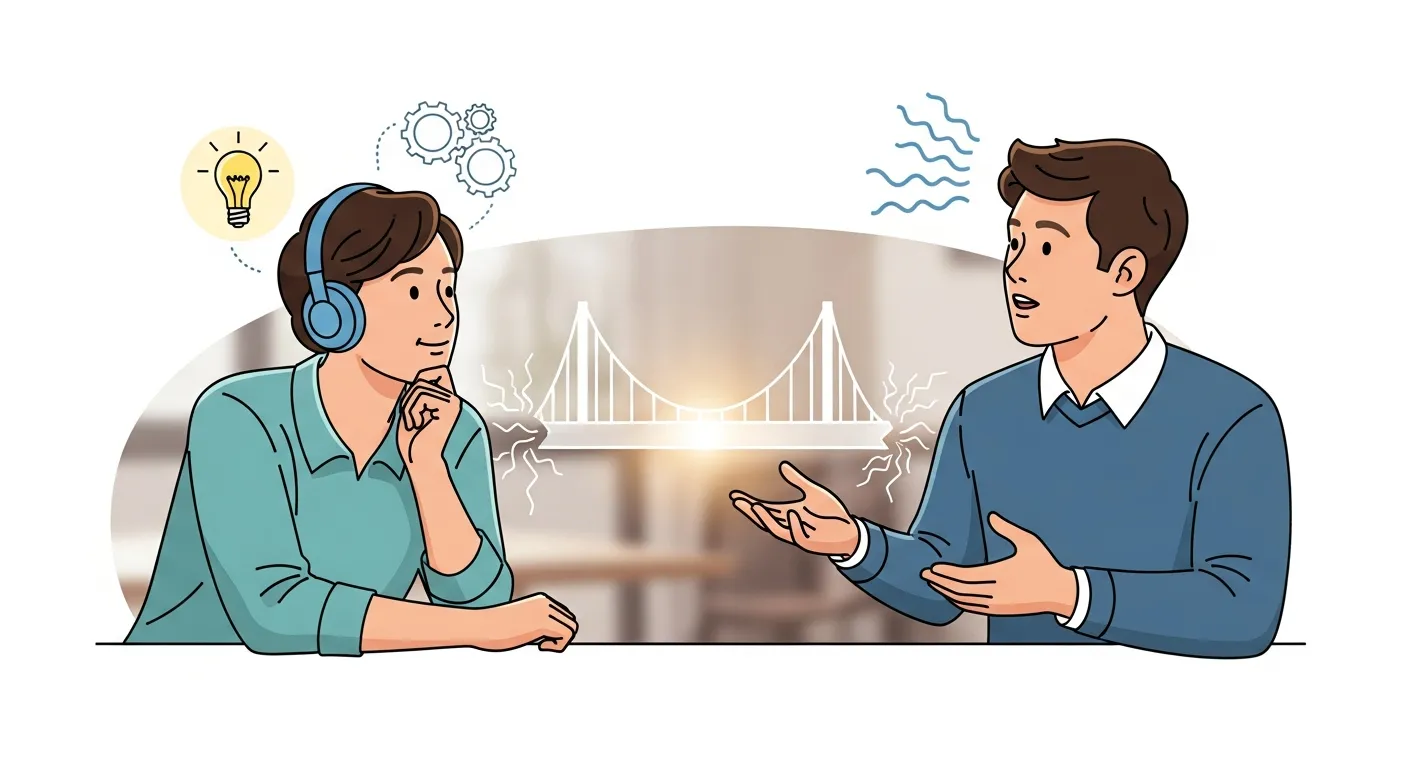
This guide explains personal listening styles, active listening skills, and communication effectiveness. It helps you understand how people process information differently and how adapting your listening improves relationships, teamwork, and overall interpersonal communication.
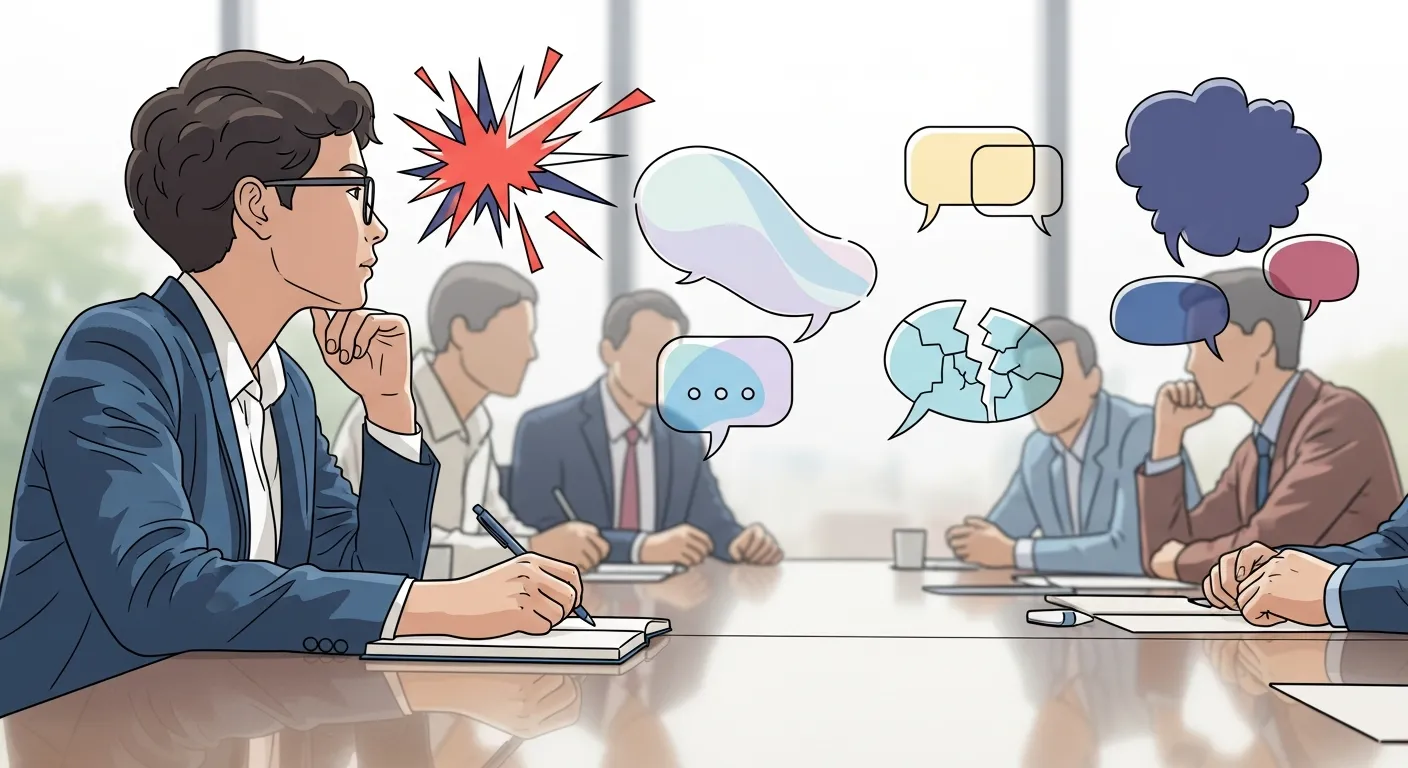
You are sitting in a meeting room, explaining a project roadblock to your manager. You want to walk through the background context and the technical challenges you are facing. Halfway through your explanation, your manager interrupts, asking for the bottom-line solution. You feel rushed and unheard, while your manager feels frustrated.
Neither of you communicated poorly, but your signals completely crossed. This type of friction happens constantly in offices, homes, and coffee shops. We often assume that listening is a passive activity, simply the act of keeping quiet while someone else speaks.
However, listening is an active, highly individualized process. Every person filters incoming information through their own specific preferences and habits. Understanding your personal listening style can profoundly impact your overall communication effectiveness.
When you know how you naturally process information, you can identify why certain conversations flow easily. Adapting your personal listening style to fit different contexts allows you to connect better with colleagues, friends, and family. This guide explores how to build active listening skills and master interpersonal communication skills.
What Is a Personal Listening Style?
A personal listening style is a preferred way of making sense of spoken messages. It goes far beyond the physical capability of hearing sounds. It involves where you direct your attention, what details you prioritize, how you emotionally react, and even how quickly you transition from hearing words to taking action.
The foundation of a well-developed personal listening style rests on several pillars:
- Perception: How you interpret tone, volume, and delivery.
- Prioritization: Whether you seek facts, emotions, solutions, or efficiency.
- Reaction: Your instinctive emotional or logical response.
- Flexibility: Willingness to adapt to different speakers and contexts.
Communication scholars have identified several common listening styles in communication. These frameworks help us understand human interaction. Very few people rely entirely on just one style for every conversation.
You might be highly action-oriented at work when deadlines are tight. However, you might shift to a people-oriented personal listening style when talking to a close friend. Recognizing these nuances gives you a powerful tool for navigating daily interactions.
The Role of Active Listening Skills
Active listening skills are the foundation of any healthy personal listening style. Active listening means fully engaging with the speaker rather than simply waiting for your turn to talk. It requires immense focus, self-awareness, and deliberate practice, going beyond baseline hearing.
Developing strong active listening skills involves several components:
- Reflective Responses: Paraphrase key points back to the speaker to signal understanding.
- Clarifying Questions: Ask for more details if you do not understand.
- Elimination of Distractions: Put away devices, minimize noise, and give your full attention.
- Non-Verbal Feedback: Use nods, facial expressions, or posture to indicate interest.
When you utilize active listening skills, your communication effectiveness drastically improves. You pick up on non-verbal cues and subtle emotional shifts. This elevates your interpersonal communication skills to a completely new level, allowing your personal listening style to adapt fluidly as needed.
The Four Core Listening Styles in Communication
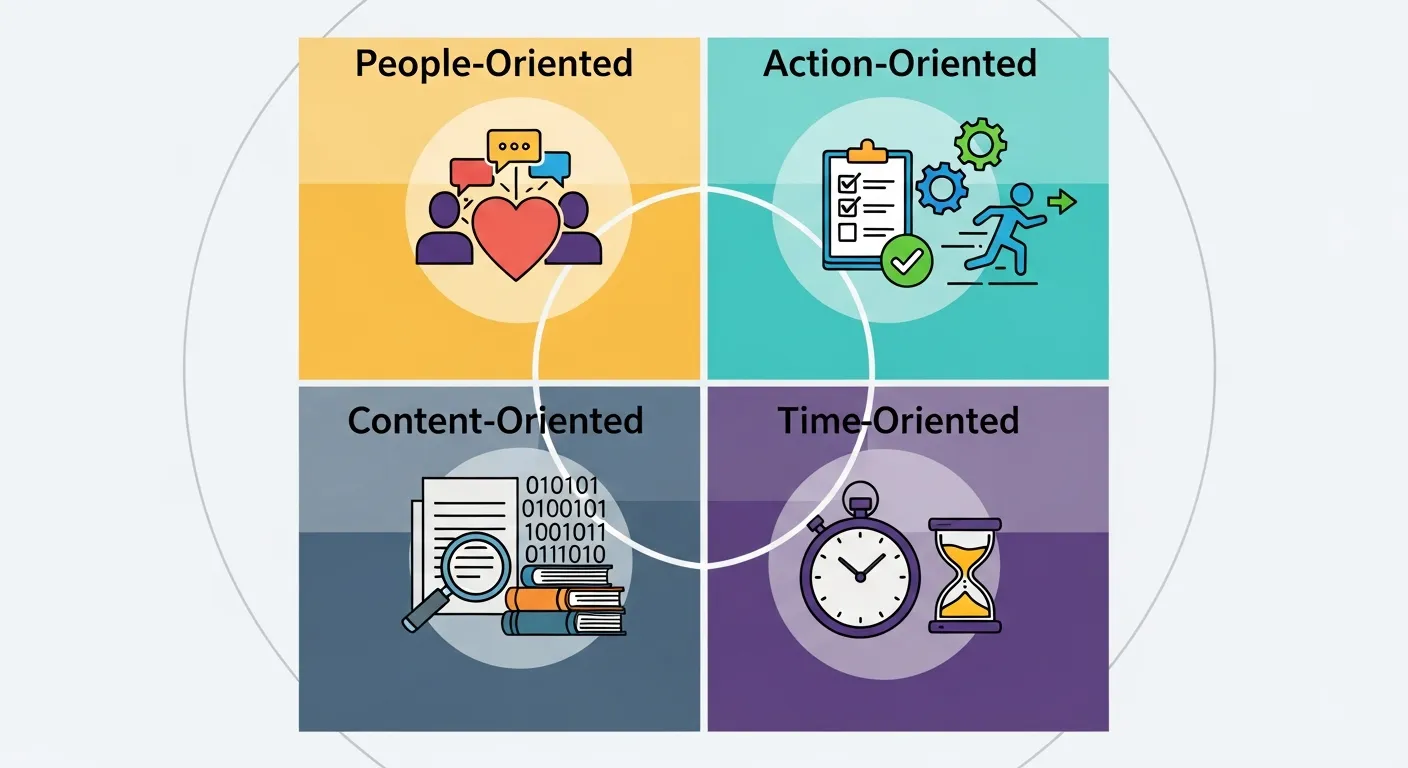
Understanding the four primary listening styles in communication helps you identify your own habits. It also helps you recognize the preferences of those around you. Let us explore these categories deeply and see how each style influences communication effectiveness and interpersonal communication skills.
People-Oriented Listeners
People-oriented listeners focus on the speaker’s feelings, emotions, and underlying relationships. When you speak to them, they pay close attention to your non-verbal cues. They prioritize your tone of voice and emotional state over hard data, making them incredibly empathetic.
Real-Life Example:
If a team member is stressed, a people-oriented listener will pause the task to check on their well-being. In a family setting, these listeners comfort a loved one before discussing any solution.
Key Points:
- Strengths: Highly empathetic, great at building trust, supportive, excellent for resolving tension.
- Weaknesses: Can miss technical details, easily emotionally overwhelmed, may gloss over facts needed for decisions.
- Best environment: Counseling, human resources, deep friendships, mediation roles.
Action-Oriented Listeners
Action-oriented listeners want clear, concise, and organized information. They are highly solutions-driven and prefer speakers who get straight to the point. Among listening styles in communication, this group is most focused on achieving results.
In Practice:
In high-pressure work settings, action-oriented listeners keep the group from losing focus. They summarize ideas quickly and drive meetings to resolution.
Key Points:
- Strengths: Efficient, solution-oriented, keeps projects moving, maintains productivity.
- Weaknesses: Impatient, can appear blunt or uncaring, risk alienating emotional speakers.
- Best environment: Crisis management, executive leadership, project execution, fast-paced project teams.
Content-Oriented Listeners
Content-oriented listeners focus on facts, intricate details, logic, and the credibility of the information. They want to hear absolutely all the evidence before forming an opinion, evaluating communication effectiveness based on logic and analysis.
Example:
Content-oriented listeners thrive in legal, scientific, or technical meetings. They dissect complex reports, ask questions, and prefer decisions backed by data.
Key Points:
- Strengths: Analytical, detail-oriented, highly logical, rigorous in quality control.
- Weaknesses: Overly critical, slow to make decisions, potential to derail momentum in group discussions.
- Best environment: Data analysis, legal review, scientific research, R&D sessions.
Time-Oriented Listeners
Time-oriented listeners value efficiency above all else. They are constantly aware of the clock and prefer strict deadlines. These listeners expertly manage time but may overlook nuance for the sake of speed.
Scenario:
In medical or emergency environments, time-oriented listeners keep interactions short to focus on urgent priorities.
Key Points:
- Strengths: Punctual, respects boundaries, highly organized, ensures adherence to schedules.
- Weaknesses: Abrupt, misses nuance, creates rushed environments, can demoralize others if not balanced with empathy.
- Best environment: Newsrooms, dispatch centers, tight deadlines, time-bound negotiations.
Summary of Listening Styles in Communication
|
Listening Style |
Primary Focus |
Biggest Strength |
Biggest Weakness |
Ideal Contexts |
|---|---|---|---|---|
|
People-Oriented |
Emotions, rapport |
Empathy, trust |
Misses facts for feelings |
HR, counseling, family talks |
|
Action-Oriented |
Outcomes, solutions |
Efficiency |
Impatience, abruptness |
Business, crisis tasks, leadership |
|
Content-Oriented |
Details, logic |
Analytical accuracy |
Over-analysis, slow action |
R&D, law, science |
|
Time-Oriented |
Time, conciseness |
Stays on track |
Can rush, seem insensitive |
Medical teams, news, urgent meetings |
The Foundation of Interpersonal Communication Skills
Developing a flexible personal listening style requires a deep understanding of human interaction and the mechanics behind effective communication. Successful interpersonal communication skills are built upon the ability to discern both verbal and nonverbal messages, regardless of the context.
Key Elements of Interpersonal Communication
- Sender and Receiver Roles: Communication requires not only a clear sender but a receptive, adaptable receiver—your role as a listener is equally vital.
- Feedback Loops: To maximize communication effectiveness, the listener must provide feedback, ensuring that the original message is understood and appropriately acted on.
- Cultural Awareness: Recognize that personal listening style can be shaped by culture, upbringing, and workplace norms.
To dig deeper, explore what is interpersonal communication for a full breakdown of how messages move between senders and receivers.
Strategies to Strengthen Interpersonal Communication Skills
- Active questioning: Ask clarifying follow-ups.
- Reflective listening: Confirm and summarize what you heard.
- Nonverbal alignment: Use gestures and eye contact to reinforce engagement.
- Cultural sensitivity: Adapt your personal listening style according to different cultural expectations.
Enhancing Communication Effectiveness Through Awareness

Your preferred personal listening style shapes every interaction. Being aware of your default style as well as those around you allows you to increase communication effectiveness and strengthen interpersonal communication skills.
In Professional Settings
- Team synergy: Recognize who is action-oriented and who is content-oriented to balance rapid decision-making with accuracy.
- Client communications: Adjust your delivery—summarize for time-oriented clients, expand on data for content-oriented ones.
- Leadership tactics: Use people-oriented listening with team members needing support, switch to action-oriented style in high-pressure moments.
Matching Communication Approach to Listening Style
|
Speaker’s Communication Goal |
Listener’s Style |
Best Approach |
|---|---|---|
|
Motivate Team |
People-Oriented |
Use empathetic language and support |
|
Delegate Tasks |
Action-Oriented |
Provide direct instructions |
|
Present Report |
Content-Oriented |
Offer detailed evidence, facts |
|
Update Before Deadline |
Time-Oriented |
Keep briefing concise and on schedule |
In Personal Relationships
A successful relationship requires adapting your personal listening style to meet your partner’s needs. In family settings, showing empathy during emotional conversations and shifting to solutions during problem-solving ensures both emotional and pragmatic needs are met. Honing interpersonal communication skills in these areas leads to fewer misunderstandings and deeper bonds with friends and loved ones.
Advanced Barriers to Communication Effectiveness
Even the best communicators struggle if unaware of potential obstacles. Understanding these barriers and developing strong active listening skills will further enhance your personal listening style and your listening styles in communication toolbox.
Common Barriers Include:
- Preconceptions: Listening only for what confirms your beliefs.
- Distractions: Allowing environment, devices, or multitasking to dilute focus.
- Emotional state: Stress, fatigue, and anxiety hinder your ability to hear others accurately.
- Language or cultural differences: Misinterpretation based on vocabulary or cultural context.
- Role-based expectations: Hierarchical dynamics, such as manager-employee, can skew communication.
Overcoming Communication Barriers
|
Barrier Type |
Impact |
Suggestions to Overcome |
|---|---|---|
|
Preconceptions |
Filters message, leads to misjudgment |
Stay open-minded, ask for clarification |
|
Distractions |
Misses main message |
Eliminate digital distractions, focus physically |
|
Emotional Fatigue |
Reduces patience and attention |
Pause conversation until calm and rested |
|
Language Differences |
Confusion, lost meaning |
Use simple language, confirm understanding |
|
Power Dynamics |
Withholds critical info from subordinates |
Foster trust, encourage questions and feedback |
Building Resilience Through Active Listening Skills
Practicing resilience means pausing, reflecting, and not reacting defensively. This cultivates superior interpersonal communication skills and boosts communication effectiveness, especially when facing a speaker whose personal listening style doesn’t match your own.
Developing Better Active Listening Skills
Improving your communication effectiveness starts with deep self-awareness. You need to identify your default personal listening style and learn to quickly spot the preferences of the people around you.
Self-Assessment Techniques
- Journaling: After meetings, write down what you heard, where your focus drifted, and why.
- Feedback from others: Ask trusted peers to comment on your listening strengths and gaps.
- Role-plays: Practice responding in different listening styles to gain flexibility.
Reading Others’ Listening Styles in Communication
- Observe whether the person interrupts or asks clarifying questions (action-oriented).
- Does the listener nod, maintain eye contact, and provide affirmations (people-oriented)?
- Is there a focus on “facts,” quantifiable data, or clarification requests (content-oriented)?
- Do they fidget, glance at clocks, or steer the conversation to timelines (time-oriented)?
By fine-tuning your ability to recognize these cues, your active listening skills become sharper and your communication effectiveness rises dramatically.
Adaptability: The Hallmark of Effective Communication
A rigid approach to personal listening style risks alienating those around you. Adaptability—the willingness to calibrate your listening based on context and audience—is crucial. Practicing this flexibility not only strengthens interpersonal communication skills but also leads to a dramatic improvement in team outcomes, conflict resolution, and long-term relationships.
Tips for Adaptive Listening:
- Pause between conversations to reset your mindset.
- Prepare by considering who you will be communicating with and what their likely listening style may be.
- Alternate between summarizing (for time- or action-oriented listeners) and paraphrasing emotional tone (for people-oriented or content-oriented listeners).
- Acknowledge when your default style isn’t meeting the needs of a speaker, and don’t be afraid to explicitly ask, “Would it help if I summarized the key points or listened more to how you feel?”
Personal Listening Style in Diverse Contexts
Virtual Communication
Remote work and online meetings add another layer to listening styles in communication. Technical glitches require a personal listening style that’s both patient and proactive with clarifying questions. Chat platforms diminish non-verbal cues, so written summaries and explicit appreciation for each perspective become crucial.
Cross-Cultural Communication
Culture heavily impacts preferred communication and personal listening style. In some cultures, interrupting is seen as a sign of engagement; in others, it’s rude. Politeness formulae and contextual cues also vary—adapting your active listening skills is particularly important in international teamwork.
Actionable Steps to Harness Your Personal Listening Style
- Conduct regular self-audits of your listening performance.
- Map out your default and secondary personal listening styles.
- Make conscious adjustments based on the relationship, setting, and desired outcome.
- Invest in workshops or external resources on active listening skills.
- Share your listening preferences with colleagues and encourage them to do the same to foster transparent, effective communication.
Conclusion
Listening is absolutely not a one-size-fits-all skill. It is a highly dynamic, active process shaped by our unique preferences. By recognizing the major differences between various listening styles in communication, you stop fighting natural tendencies.
When you adapt your personal listening style to suit the situation, you build stronger professional networks. You also cultivate much deeper personal relationships. Mastering active listening skills drastically improves your communication effectiveness and career trajectory.
Start paying close attention to the communication cues around you today. Adjusting your interpersonal communication skills takes practice, but the resulting clarity is entirely worth the effort. Embrace your personal listening style and watch your conversations transform.
Frequently Asked Questions
What exactly is a personal listening style?
A personal listening style is your natural, preferred method of processing spoken information. It dictates what details you focus on, such as emotional tone, logical facts, or actionable steps. Understanding this improves your overall communication effectiveness.
Why are active listening skills so important?
Active listening skills force you to fully engage with the speaker rather than passively hearing words. They prevent costly misunderstandings and build deep trust in relationships. These skills are the bedrock of strong interpersonal communication skills.
What are the four main listening styles in communication?
The four primary listening styles in communication are people-oriented, action-oriented, content-oriented, and time-oriented. Each style has distinct strengths and weaknesses depending on the environment. Recognizing them helps tailor your daily conversations.
Can my personal listening style change over time?
Yes, your personal listening style can adapt based on your environment and stress levels. You might be time-oriented at a busy office but people-oriented at home with family. Flexibility is a key indicator of high communication effectiveness.
How do I identify someone else’s personal listening style?
You can identify their personal listening style by observing their body language and the questions they ask. Just as artists use composition tips to focus the viewer’s eye, active listening skills help focus your auditory attention on these specific verbal cues.
How does a mismatched personal listening style cause conflict?
Friction occurs when a speaker’s delivery doesn’t match the listener’s processing preference. For example, a data-driven speaker will frustrate an action-oriented listener who just wants the final solution. This damages interpersonal communication skills.
What is the best personal listening style for leadership?
There is no single best personal listening style for leadership; the best leaders use a hybrid approach. They use people-oriented styles for team morale and action-oriented styles during crises. Adapting styles maximizes team communication effectiveness.
How can I improve my interpersonal communication skills quickly?
Improve your interpersonal communication skills by practicing active listening skills daily. Maintain strong eye contact, avoid interrupting, and ask clarifying questions. This makes the speaker feel truly valued and understood.
Are content-oriented listening styles in communication bad for teamwork?
No, content-oriented listening styles in communication are excellent for quality control and risk management. However, they can slow down fast-paced brainstorming sessions due to over-analysis. Balancing this style with action-oriented teammates works best.
How do active listening skills boost overall communication effectiveness?
Active listening skills eliminate assumptions and confirm that the intended message was correctly received. By summarizing and validating the speaker’s points, you remove ambiguity. This directly leads to higher, more efficient communication effectiveness.
