

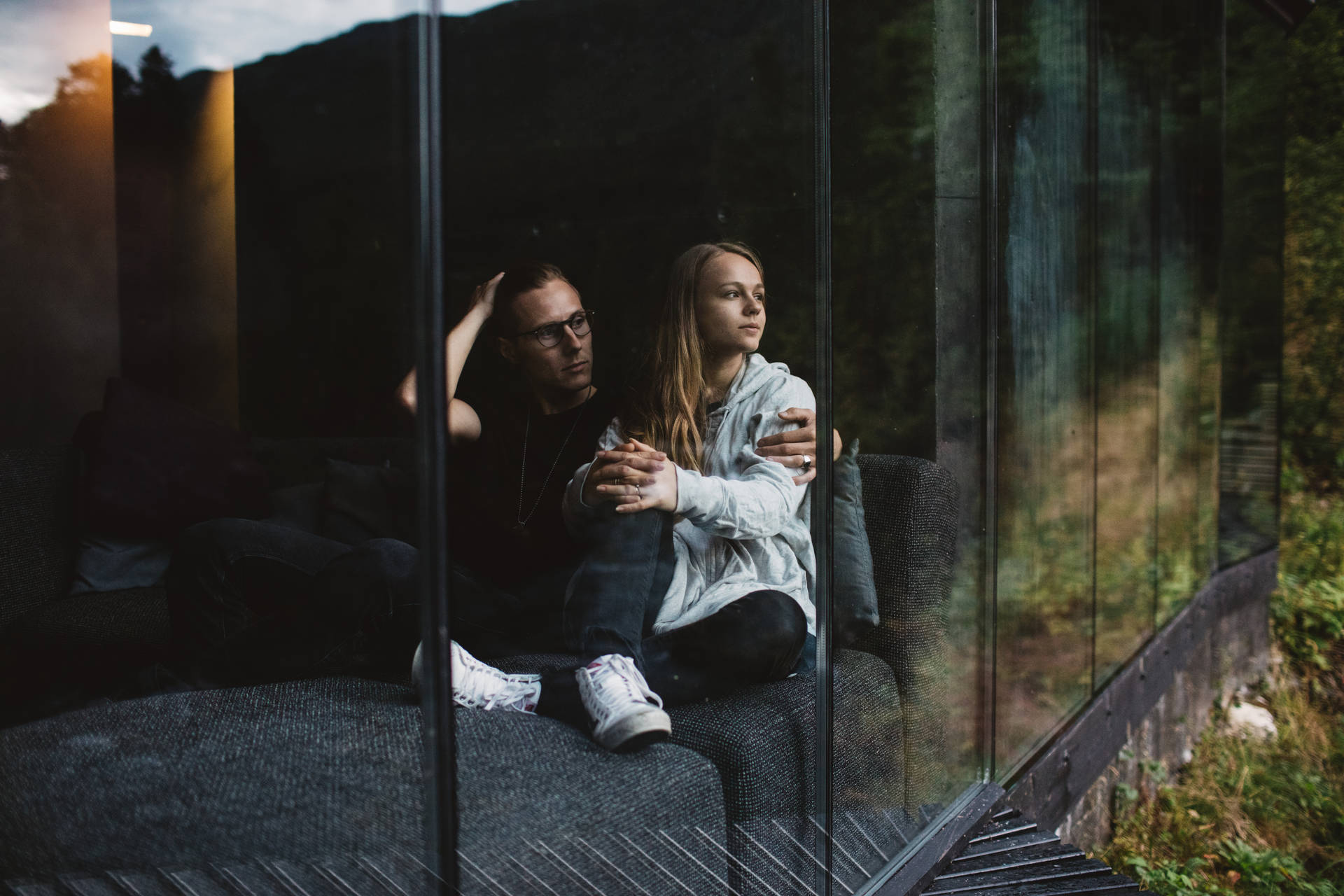
Mastering composition in fashion photography transforms ordinary shots into compelling editorials. By using techniques like the Rule of Thirds, leading lines, negative space, and dynamic angles, photographers can highlight garments, guide attention, and create powerful visual storytelling.
Capturing the perfect fashion editorial requires more than just a beautiful model and a high-end camera. To truly make a garment stand out and tell a compelling visual story, you must master the art of framing your subject. Without a solid understanding of how to arrange elements within your frame, even the most exquisite styling can fall flat.
Applying the right Composition Tips for Fashion Photography transforms basic snapshots into professional, magazine-ready images. Excellent composition guides the viewer’s eye precisely where you want it to go, emphasizing the clothing, the mood, and the narrative. Whether you shoot in a controlled studio environment or a chaotic urban street, mastering these foundational techniques is absolutely crucial for your success as a creative professional.
In this comprehensive guide, we will explore the foundational principles that govern visual balance and impact. You will learn practical photography tips, discover how to manipulate angles, and understand how to manage negative space effectively. By the end of this post, you will possess a toolkit of Composition Tips for Fashion Photography that will completely revolutionize your creative workflow.
Understanding the Core of Visual Storytelling
Before diving into specific Composition Tips for Fashion Photography, we must address why composition matters so much in this specific genre. Fashion imagery serves a distinct commercial and artistic purpose: it must sell a lifestyle, a feeling, and a product.
When you frame a shot, you make deliberate choices about what to include and what to exclude. The modern digital age, heavily influenced by Silicon Valley’s fast-paced tech developments, demands striking visuals. People scroll through their social media feeds rapidly. Your images have mere milliseconds to capture attention before the viewer moves on. Using powerful Composition Tips for Fashion Photography ensures your work stops the endless scroll.
The Role of Technology in Modern Shoots
Today’s photographers rely on smart devices to manage their time and energy. From using smartwatches to track shoot schedules to managing massive gigabytes of raw image data, tech integration is vital. However, no amount of advanced technology can fix a poorly composed photograph. A strong foundation in visual principles remains your most valuable asset.
Digital Trends: Editing for Impact
Modern fashion photographers must also navigate a rapidly evolving digital post-production landscape. Even with powerful editing tools, starting with strong Composition Tips for Fashion Photography is crucial. Retouching should enhance—not distract from—the integrity of your visual narrative. Crafting a workflow that prioritizes composition keeps your images relevant, impactful, and ahead of shifting creative trends.
Tip 1: Mastering the Rule of Thirds and Beyond
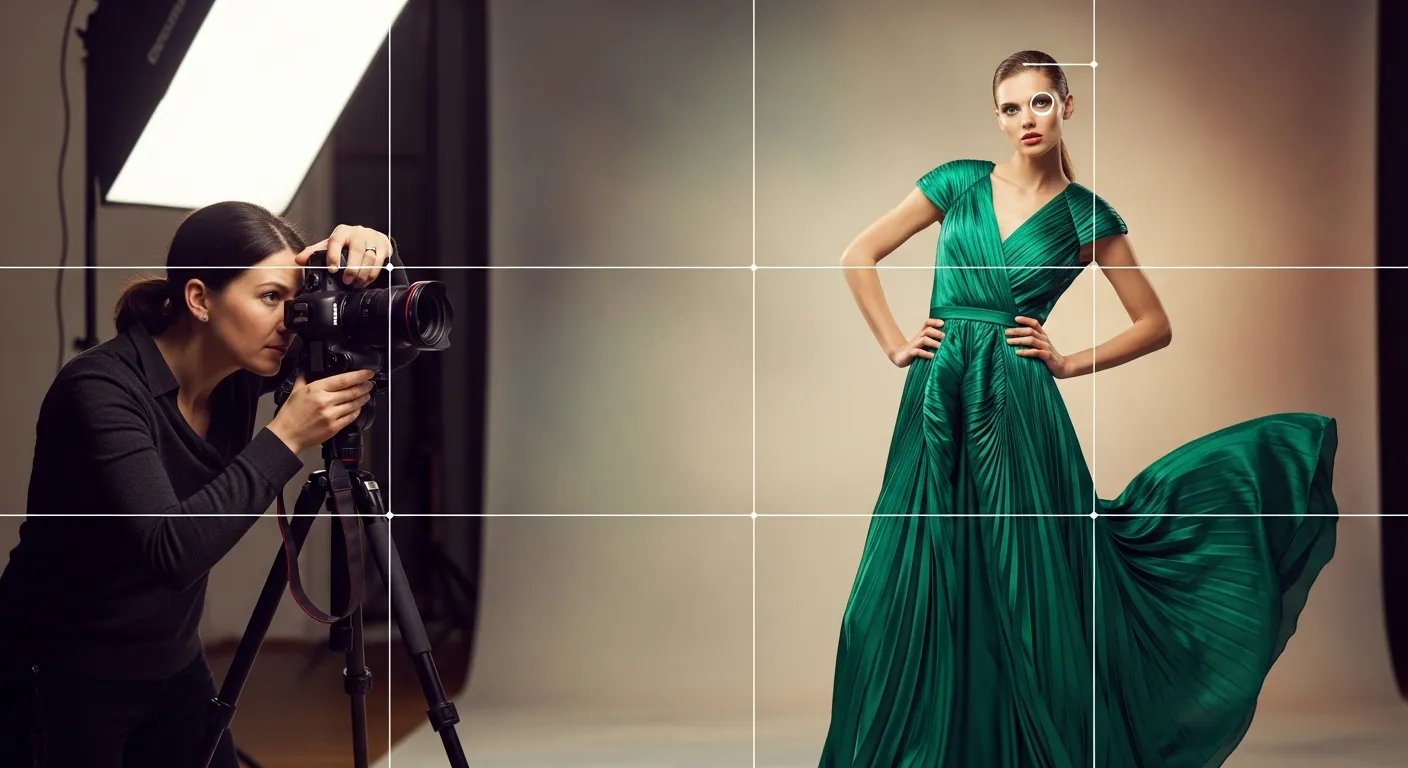
One of the most fundamental Composition Tips for Fashion Photography involves the Rule of Thirds. This principle divides your frame into a grid of nine equal rectangles using two horizontal and two vertical lines.
Placing Your Subject for Maximum Impact
Instead of placing your model dead center, align their key features—like their eyes or the most crucial detail of the garment—along these intersecting grid lines. This deliberate placement creates dynamic tension and visual interest. It feels much more natural to the human eye and gives the photograph a professional polish.
When you implement these photography tips, you encourage the viewer’s gaze to wander through the image rather than getting stuck in the middle. For instance, placing the model on the right third of the frame allows the background environment to contextualize the outfit on the left.
Breaking the Rules Strategically
Once you master the Rule of Thirds, you can break it purposefully. Center framing works exceptionally well when you want to convey power, symmetry, or authority. If your model wears a highly structured, symmetrical gown, placing them perfectly in the center amplifies the garment’s impact. Knowing when to apply and when to break these Composition Tips for Fashion Photography separates novices from experts.
Case Studies: Rule of Thirds in Action
If you analyze well-known fashion magazine covers, you’ll see that editors routinely leverage the Rule of Thirds to guide the viewer’s attention to either the model’s face or the most striking features of a garment. Subtle adjustments—like a glance angled toward empty space or a hand placed on a dividing line—are intentional.
For even more in-depth strategies on placement and line, dive into additional composition insights that break down case studies and step-by-step applications.
Tip 2: Utilizing Leading Lines for Editorial Flair
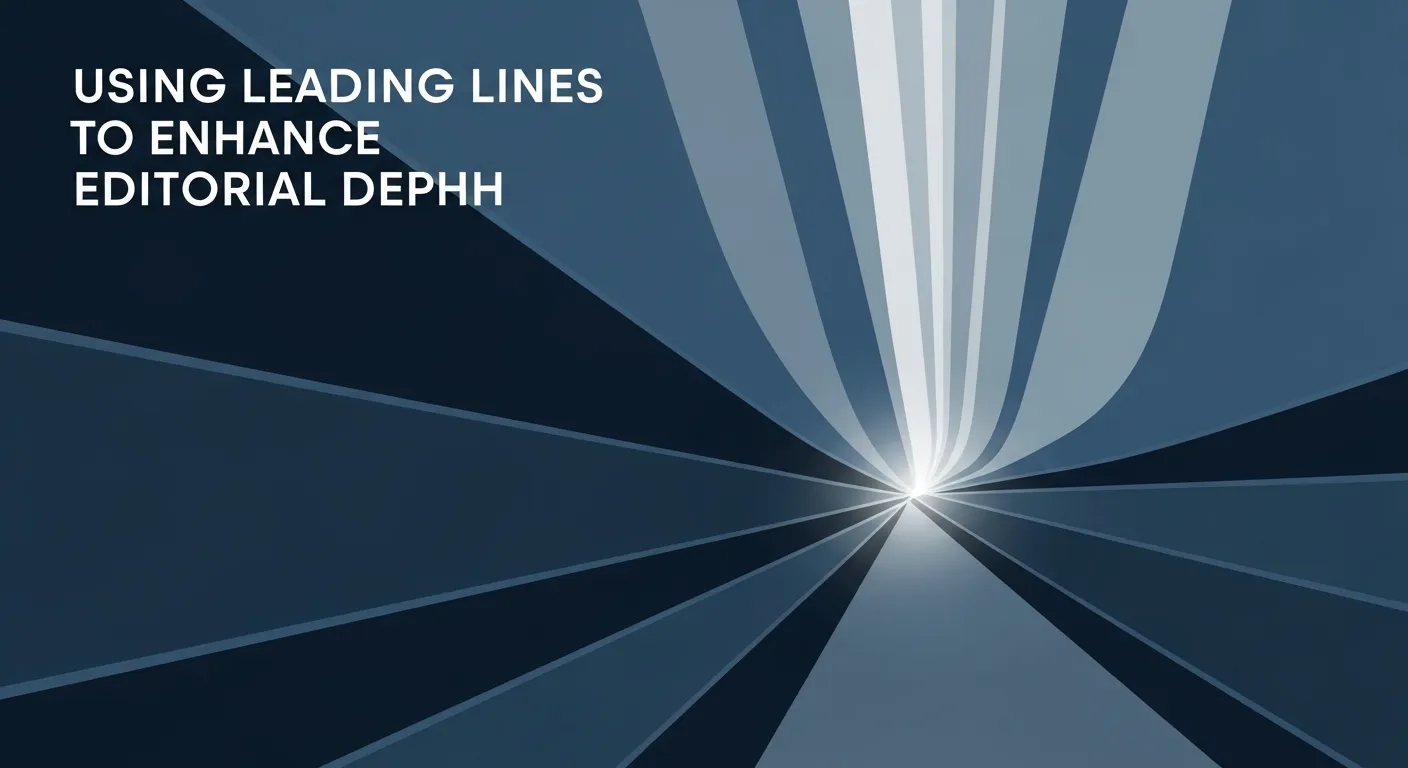
Another powerful technique in our arsenal of Composition Tips for Fashion Photography involves leading lines. Leading lines are natural or architectural elements within your environment that visually guide the viewer’s eye directly toward your subject.
Natural vs. Architectural Lines
You can find leading lines everywhere if you train your eye to look for them. A long staircase, a receding hallway, a line of trees, or even the harsh shadow cast by a building can serve as a leading line. Incorporating these lines into your framing creates depth and dimension, pulling the audience directly into the world you created.
When shooting an urban editorial, use the converging lines of skyscrapers to point down toward your model. This technique emphasizes the clothing while grounding the subject in their environment. Utilizing leading lines is one of the most effective photography tips for creating a three-dimensional feel in a two-dimensional medium.
Advanced Leading Lines: Color, Light, and Repetition
Leading lines don’t have to be physical objects. Strategic placement of colors (like a bold red scarf echoing a nearby billboard) or light sources can guide the viewer’s direction as well. Repeated patterns, such as columns or windows, can form visual “paths” when included intentionally.
Incorporating Accessories and Props
Props such as handbags or hats, when extended outward or positioned along a line, can serve as subtle compositional cues. Experienced stylists and photographers collaborate to ensure these visual elements support the garment narrative, not distract from it.
Composition Elements Comparison
|
Composition Technique |
Best Used For |
Visual Effect |
|---|---|---|
|
Rule of Thirds |
Environmental portraits |
Creates balance and natural flow |
|
Leading Lines |
Urban or architectural shoots |
Draws the eye, adds 3D depth |
|
Center Framing |
Symmetrical garments, power shots |
Commands authority, highlights symmetry |
|
Negative Space |
Minimalist editorials |
Adds elegance, reduces clutter |
Tip 3: Balancing Negative Space and Framing

Many beginners feel the need to fill every inch of their frame with interesting elements. However, one of the most crucial Composition Tips for Fashion Photography is learning to embrace negative space.
Giving the Garment Room to Breathe
Negative space refers to the empty areas surrounding your main subject. This emptiness is not wasted space; it is a powerful compositional tool. By leaving a significant amount of empty sky, a blank studio wall, or an out-of-focus background around your model, you eliminate distractions.
This approach forces the viewer to focus entirely on the fashion. Minimalist composition elevates the perceived value of the clothing, making it look more luxurious and intentional. It provides a sense of elegance and sophistication that cluttered images often lack. Embracing simplicity is one of the most valuable photography tips you can adopt for high-end editorials.
Textures and Background Choices
Selecting the right background texture—a smooth gradient, rough concrete, or lush nature—impacts negative space’s mood. Experiment with how texture and color contrast the garment. Sometimes muted tones allow vibrant clothing to pop, while high-contrast backdrops dramatize monochrome attire. Skilled professionals even leverage post-production blur to carve out negative space after the shot.
Minimalism in Editorials
Leading high-fashion magazines frequently rely on the minimalist approach for cover shoots, placing the model off-center in a sea of white or black. It draws powerful attention to key details: a bold lipstick, the stitching of a jacket, or a statement accessory.
To refine your technical approach to space and lighting, review these professional insights:
Check out these fashion photography technique tips
Tip 4: Exploring Dynamic Angles and Perspectives
Our final entry in the top Composition Tips for Fashion Photography involves changing your physical perspective. Most amateur photos are shot from eye level, which can feel incredibly static and boring.
High Angles vs. Low Angles
To create a striking fashion image, move your camera. Shooting from a low angle, pointing upward at the model, elongates their body and makes them look powerful, dominant, and heroic. This technique works perfectly for showcasing dramatic outerwear or wide-legged trousers.
Conversely, shooting from a high angle looking down creates a sense of intimacy and vulnerability. It emphasizes the face and the upper details of the garment. Moving your body and exploring different vantage points is a core component of applying effective Composition Tips for Fashion Photography.
Creating Movement Through Angles
You can also tilt your camera slightly to create a “Dutch angle.” This deliberate tilt introduces a sense of unease, kinetic energy, and avant-garde style to the shot. When combined with a model in motion—such as walking briskly or tossing a flowing dress—dynamic angles capture the raw energy of the clothing.
Experimenting with Focal Lengths and Lenses
Don’t forget that your choice of lens can dramatically alter perspective. Wide-angle lenses exaggerate distance and make legs appear endless—a popular trick in fashion editorials. Telephoto lenses compress distance, creating intimacy and focus on facial features or textures. By experimenting with both, you’ll discover new creative approaches to Composition Tips for Fashion Photography.
Expanding Your Creative Toolkit: Advanced Composition Strategies
Mixing Natural and Artificial Light
Understanding how natural light and studio lighting interact within your composition is a game-changer. Side-lighting creates dramatic shadows that sculpt clothing and add depth. Backlighting can outline a subject and highlight fabric translucency, which is especially effective for ethereal fashion or eveningwear.
Color Grading as Compositional Tool
Modern fashion photographers increasingly use color grading not only in post-production but as an in-camera compositional consideration. A pop of color in the background or a complementary tone in a prop can draw attention to the model’s pose or the outfit’s signature detail.
Composing for Movement and Expression
Fashion is dynamic. Capturing motion—swirling skirts, tossed jackets, leaping models—brings garments to life and makes your shot stand out in a crowded feed. Use continuous shooting modes to catch the perfect moment and adjust shutter speeds to ensure smoothness or desired blur.
The Psychology of Composition: Connecting with the Viewer
Photography is a language, and every compositional decision shapes the story the viewer receives. Eye contact from the subject creates intimacy, while a gaze into the distance might spark mystery. Framing part of the subject “looking out of frame” leads the viewer to imagine the world beyond the photograph, creating narrative depth.
Fashion brands often use composition to reinforce their identity: luxury brands opt for clean lines and symmetry, while youth or streetwear labels embrace vibrant chaos and unusual framing.
For further inspiration, analyze fashion campaigns from top houses or explore online galleries that highlight diverse photographic voices. Collaborate with stylists and art directors to align every compositional element with the broader vision for the shoot.
Frequently Asked Questions
What are the best Composition Tips for Fashion Photography beginners?
The most essential starting point is mastering the Rule of Thirds to ensure balanced images. You should also focus on finding clean backgrounds that do not distract from the clothing. Keep practicing these core photography tips until framing becomes second nature.
How does negative space improve fashion images?
Negative space removes visual clutter, forcing the viewer’s eye directly onto the model and the garment. This technique creates a luxurious, high-end editorial feel commonly seen in major magazines. It gives the clothing essential room to breathe within the frame.
Should I always keep my camera at eye level?
No, shooting constantly from eye level results in flat, predictable imagery. You must explore low angles to elongate the model or high angles to emphasize specific details of the outfit. Changing your perspective is one of the most vital Composition Tips for Fashion Photography.
How do I use leading lines in an outdoor shoot?
Look for architectural features like roads, fences, or long shadows that naturally converge. Position your model at the point where these lines intersect to draw the viewer’s eye directly to the fashion. This adds immense depth and scale to your outdoor editorials.
Does a minimalist wardrobe work best for complex compositions?
Minimalist clothing pairs beautifully with complex architectural backgrounds because it balances the visual weight. If you want to refine your styling options for these types of shoots, check out this guide on building your capsule wardrobe. It provides excellent insights into selecting versatile pieces.
Can I break the Rule of Thirds?
Absolutely, breaking the rules is encouraged once you understand how they work. Center framing is a fantastic way to showcase highly symmetrical or authoritative fashion pieces. Deliberate rule-breaking often leads to the most iconic and memorable fashion photographs.
How do changing global events affect fashion photography styles?
Global events often dictate the mood, location availability, and overall styling of fashion editorials. For instance, recent years have seen a massive shift toward digital formats and isolated environmental shoots. You can read more about how Paris Fashion Week 2021 carries on despite corona to see this adaptation in action.
Why is symmetry important in some fashion shots?
Symmetry creates a profound sense of harmony and visual perfection. When an outfit features bold, structured patterns, centering the model symmetrically enhances the designer’s intent. It commands attention and provides a highly stylized, rigid aesthetic.
What are the most common composition mistakes to avoid?
The most common mistake is amputating the model’s limbs awkwardly at the joints by cropping too tightly. Another major error is allowing background elements, like trees or poles, to look like they are growing out of the model’s head. Pay close attention to your entire frame before clicking the shutter.
How do I balance lighting with composition?
Lighting and composition must work together to guide the viewer’s eye to the focal point of the garment. Use shadows to create natural leading lines, and use bright highlights to emphasize the areas you placed on the Rule of Thirds grid. Mastering this balance elevates your photography tips into true artistry.
