

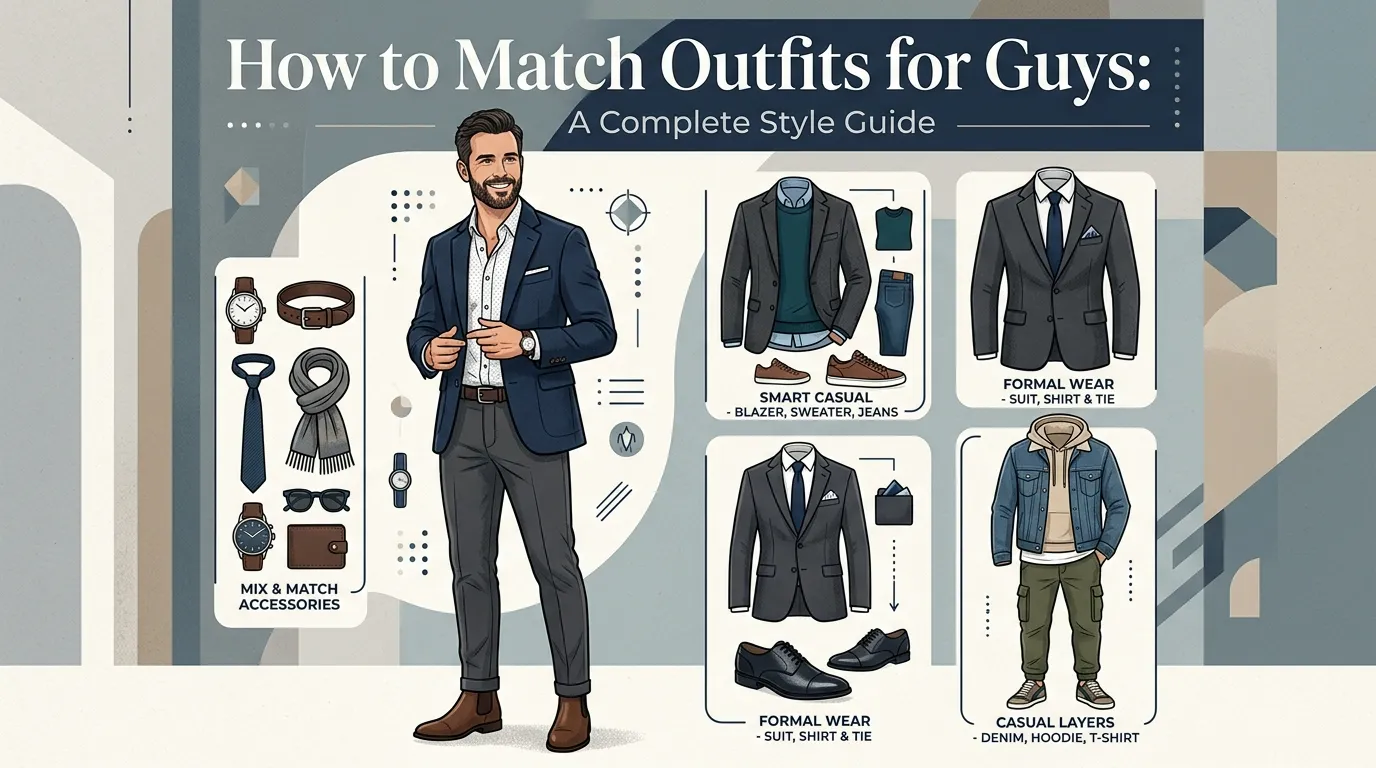
Matching outfits for guys becomes easy with simple color rules, proper fit, and wardrobe basics. Using neutrals, occasion-based styling, and smart coordination helps men dress confidently, avoid mistakes, and build a versatile, stylish wardrobe effortlessly.
Getting dressed should not feel like solving a puzzle every morning. Yet for many men, the question of what goes with what causes real stress. You stand in front of the closet, grab a shirt, hold up two pairs of pants, and still feel unsure. If that sounds familiar, you are in the right place.
This guide teaches you how to match outfits for guys in a simple, practical way. You will learn color rules, coordination tricks, and easy formulas that work for any body type or budget. Whether you dress for work, weekends, or a night out, these tips will help you look sharp with less effort.
Here is what you will walk away with:
- Clear color matching rules anyone can follow
- A handy table for pairing colors and pieces
- Outfit formulas for different occasions
- Common mistakes to avoid
- Answers to the questions guys ask most
Let us build a wardrobe that works for you.
Why Outfit Matching Matters More Than You Think
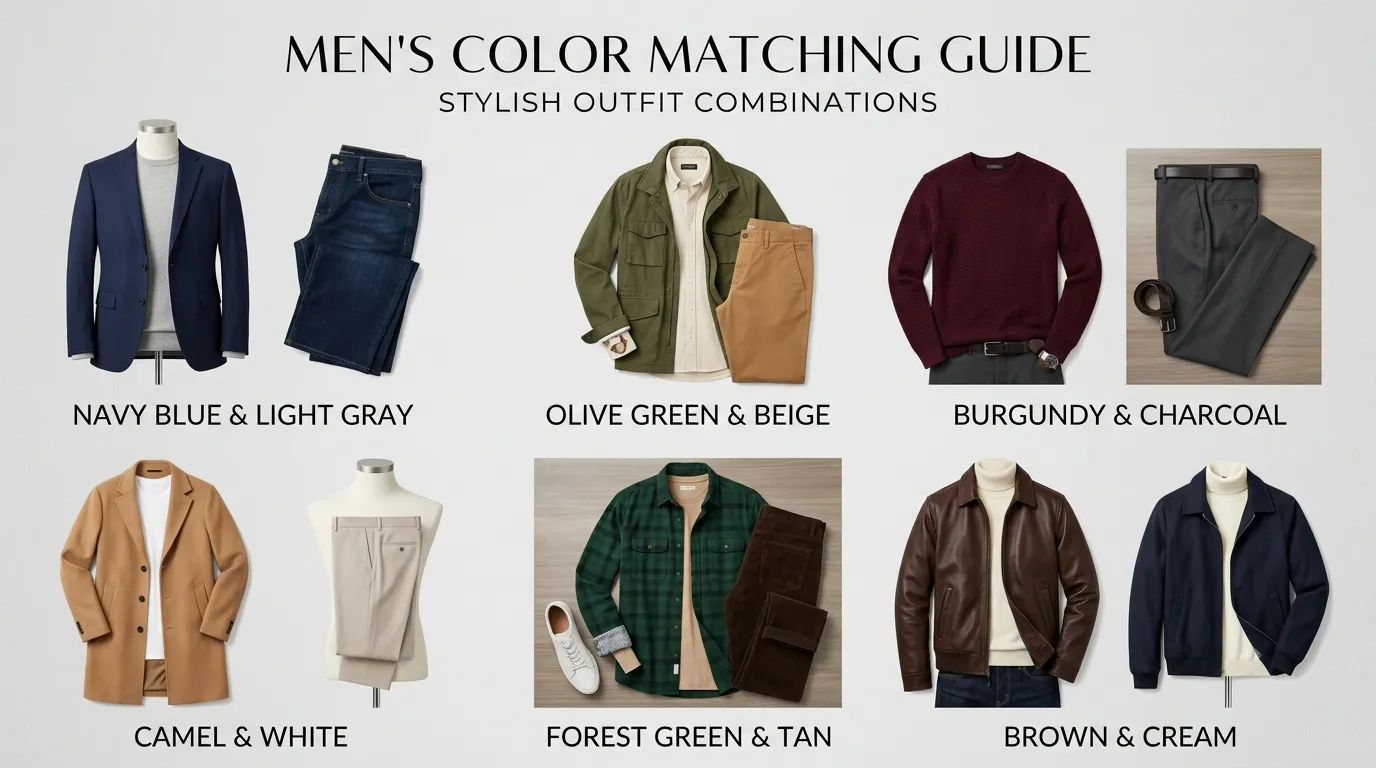
First impressions form fast. People judge your style within seconds, often before you say a word. A well-matched outfit signals that you care about details, and that confidence carries into how others treat you.
Good outfit coordination is not about wearing expensive labels. It is about how your pieces work together. A budget outfit that matches well beats a costly one thrown together poorly. The skill lies in pairing, not price.
Learning how to match outfits for guys also saves you time and money. When your wardrobe pieces coordinate, you get more combinations from fewer items. You stop buying clothes that never get worn. You start dressing with purpose.
The Confidence Connection
When you know your outfit looks good, you stand taller. You speak with more ease. This boost is real, and it shows in job interviews, dates, and daily life. Style is a tool, and matching outfits well sharpens that tool.
Style as a Skill, Not a Talent
Some guys think good dressing is something you are born with. That is a myth. Men fashion styling is a learnable skill, built from a few clear rules and a bit of practice. By the end of this guide, you will have those rules in hand.
Start With Color Matching Basics
Color is the foundation of every outfit. Get the colors right, and your look comes together. Get them wrong, and even the best clothes clash. Color matching is the first skill to master when you learn how to match outfits for guys.
The good news is that color follows simple rules. You do not need a design degree to apply them. Once you understand a few principles, you will spot winning combinations instantly.
Understand the Color Wheel
The color wheel groups colors into a circle. Colors next to each other are similar, and colors across from each other create contrast. This tool guides most matching decisions.
There are three main ways to use the wheel for color matching:
- Complementary colors: Sit opposite each other, like blue and orange. They create bold, eye-catching contrast.
- Analogous colors: Sit next to each other, like blue and green. They feel calm and natural together.
- Monochromatic colors: Use different shades of one color, like light and dark blue. They look clean and put-together.
Neutral Colors Are Your Best Friend
Neutrals include black, white, gray, navy, beige, and brown. They match with almost everything. When in doubt, lean on neutrals. They form the backbone of any solid wardrobe.
A simple trick is to build outfits around two neutrals and one accent color. For example, gray pants and a white shirt with a burgundy sweater. The neutrals ground the look, and the accent adds interest.
Warm Versus Cool Tones
Colors split into warm and cool families. Warm tones include red, orange, yellow, and brown. Cool tones include blue, green, and purple. Matching within the same temperature family often looks more natural, though mixing can work with care.
If you want to dig deeper into the science of how colors pair across design and fashion, one resource breaks it down clearly.
Studying how professionals approach color gives you a stronger eye. With that knowledge, your everyday color matching choices become faster and more confident.
The Master Color Matching
Sometimes you just want a quick reference. The table below shows reliable color pairings for tops and bottoms. Use it as a cheat sheet when you get dressed. It takes the guesswork out of color matching for good.
|
Top Color |
Best Bottom Colors |
Good Accent Colors |
Occasion Fit |
|---|---|---|---|
|
White |
Navy, gray, khaki, black |
Any color works |
All occasions |
|
Light blue |
Navy, gray, khaki, white |
Brown, burgundy |
Casual to business |
|
Black |
Gray, black, dark denim |
Red, white, silver |
Evening, formal |
|
Gray |
Navy, black, white, khaki |
Burgundy, green |
All occasions |
|
Navy |
Khaki, gray, white |
Orange, brown, red |
Casual to business |
|
Olive green |
Khaki, navy, brown |
White, mustard |
Casual, smart casual |
|
Burgundy |
Gray, navy, khaki |
White, tan |
Smart casual, evening |
|
Pink |
Navy, gray, white |
Brown, green |
Casual, smart casual |
Keep this table in mind as you shop and dress. Notice how neutrals like navy, gray, and khaki appear again and again. That is because they anchor nearly every combination. Build your wardrobe around them, and matching becomes effortless.
How to Match Outfits for Guys by Occasion
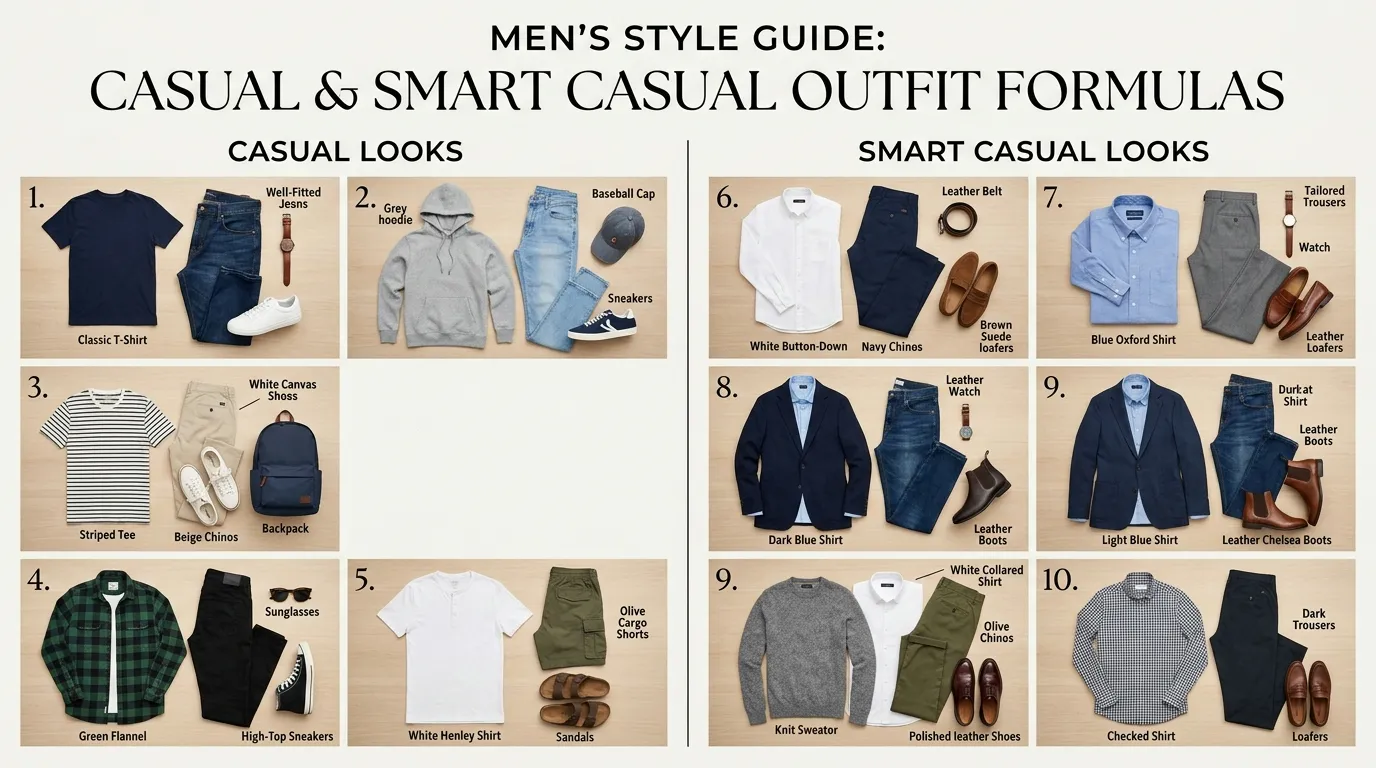
Different settings call for different looks. A great outfit at a barbecue may fall flat at a wedding. Smart outfit coordination means matching not just colors, but the whole vibe to the moment. Here is how to handle the main occasions.
Casual Everyday Looks
Casual menswear is where most guys live day to day. The goal is comfort without looking sloppy. Think well-fitted jeans or chinos paired with a clean t-shirt, polo, or casual button-up.
A reliable casual formula looks like this:
- Start with dark or mid-wash jeans
- Add a solid t-shirt or henley
- Layer with an open shirt or light jacket
- Finish with clean sneakers or casual boots
Keep colors simple. One or two neutrals plus a single accent piece keeps casual menswear looking sharp rather than busy.
Smart Casual Style
Smart casual blends comfort with polish. It works for dates, dinners, and relaxed office days. Swap jeans for chinos, add a tucked button-up or a fitted sweater, and choose leather shoes or clean minimal sneakers.
The key to smart casual is balance. Pair a dressier top with relaxed bottoms, or relaxed top with dressier bottoms. This contrast keeps the look intentional and modern.
Business and Office Wear
Office style depends on your workplace, but matching rules stay the same. Stick to neutral suits, dress shirts, and coordinated ties. Navy and gray suits offer the most versatility and pair with nearly any shirt color.
For business attire, keep these points in mind:
- Match your belt to your shoes
- Keep patterns subtle and limited
- Let one piece be the standout, not three
- Make sure everything fits well
Formal and Evening Events
Formal events demand sharper coordination. A dark suit, crisp white shirt, and matching dress shoes form the safe base. Add a tie or pocket square in a coordinating tone for personality.
For black-tie events, follow the dress code closely. When the rules are strict, simple and classic always wins. Save bold experiments for casual settings.
Building a Wardrobe That Matches Itself
The smartest way to master how to match outfits for guys is to build a wardrobe where everything coordinates. This is called a capsule wardrobe. Every piece works with several others, giving you endless combinations.
Start with versatile basics in neutral colors. These form your foundation. Then add a few accent pieces to bring in personality. The result is a closet where mismatches are nearly impossible.
Essential Wardrobe Building Blocks
Here are the core pieces every guy should own. Choose them in neutral tones for maximum flexibility:
- Tops: White t-shirt, gray t-shirt, white button-up, light blue button-up, navy sweater
- Bottoms: Dark jeans, khaki chinos, gray trousers, navy chinos
- Outerwear: Denim jacket, neutral bomber, navy blazer
- Shoes: White sneakers, brown leather shoes, casual boots
With these basics, you can create dozens of outfits. Add accent items like a burgundy sweater or patterned shirt to expand your options further.
The Power of Fit
No amount of color matching saves a poorly fitted outfit. Clothes that fit your body shape look instantly better. A simple t-shirt that fits well beats a designer piece that hangs loose or pulls tight.
When shopping, check the shoulders, chest, and length first. A good tailor can adjust the rest. Proper fit is the secret weapon behind every sharp dresser.
Quality Over Quantity
A few well-made pieces beat a closet full of cheap ones. Quality fabrics hold their shape, color, and form longer. Invest in basics you will wear often, and your wardrobe will reward you for years.
Mixing Patterns and Textures Like a Pro
Once you master colors, patterns add the next layer of style. Mixing patterns scares many guys, but a few rules make it simple. Done right, it shows real men fashion styling skill.
The main rule is to vary the scale. Pair a large pattern with a small one, like wide stripes with a tiny check. When patterns share a similar size, they compete and clash. Different scales let them work together.
Easy Pattern Mixing Rules
Follow these guidelines to combine patterns with confidence:
- Start with one pattern and one solid before mixing two patterns
- Keep patterns in the same color family
- Vary the size of each pattern
- Limit yourself to two patterns at first
Adding Texture for Depth
Texture works like a quiet pattern. A knit sweater, suede shoes, or corduroy pants add interest without loud prints. Mixing textures creates depth, especially in monochromatic outfits where colors stay similar.
For example, an all-gray outfit feels flat in one fabric. Add a wool sweater, cotton shirt, and leather shoes, and suddenly it has richness. Texture is a subtle tool that separates good dressers from great ones.
Accessories That Complete the Look
Accessories are the finishing touch in any outfit coordination. They pull a look together and show attention to detail. The right accessories elevate even a simple outfit into something memorable.
The trick is restraint. A few well-chosen pieces beat a pile of competing items. Each accessory should serve the outfit, not fight it.
Key Accessories for Men
Consider these accessories as you refine your style:
- Watch: A clean, classic watch suits almost any outfit
- Belt: Match it to your shoes for instant cohesion
- Sunglasses: Pick a shape that fits your face
- Bag: A leather or canvas bag in a neutral tone works everywhere
Matching Metals and Leathers
Keep your metals consistent. If your watch is silver, lean toward silver buckles and accents. The same goes for leather. Match the tone of your belt, shoes, and bag for a polished result.
This small detail makes a big difference. Mismatched metals or clashing leather tones break an otherwise sharp look. Consistency here signals that you sweat the details.
Common Outfit Matching Mistakes to Avoid
Even with good rules, guys make repeat errors. Knowing these pitfalls helps you dodge them. Here are the most common mistakes and how to fix them.
Wearing too many colors. Stick to two or three colors per outfit. More than that creates visual chaos. Build around neutrals and add one accent.
Ignoring fit. Baggy or tight clothes ruin any color matching effort. Always prioritize fit. When clothes fit, simple outfits look great.
Matching too perfectly. Wearing the exact same color top to bottom can look forced. Vary shades instead. A monochromatic look uses different tones of one color, not identical ones.
Forgetting the shoes. Shoes anchor an outfit. Dirty or wrong-style shoes drag down the whole look. Keep them clean and appropriate for the setting.
Overloading on accessories. A watch, a bracelet, a necklace, and rings all at once compete for attention. Pick a couple and let them shine.
Learning From Your Mirror
The mirror is your best teacher. Before you head out, do a full check. Ask yourself if the colors work, if the fit looks right, and if anything feels off. This quick habit catches most mistakes before they cost you.
Quick Outfit Formulas You Can Copy
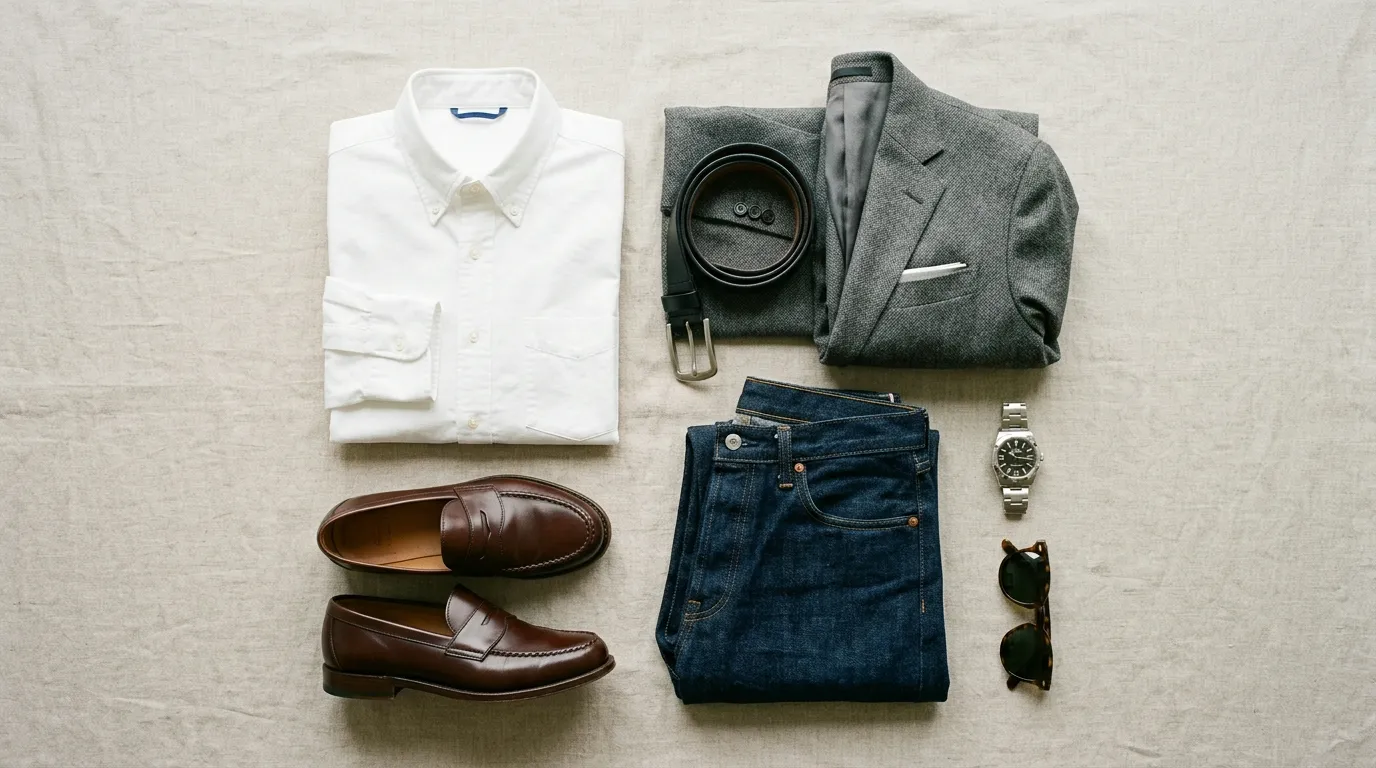
Sometimes you just want a ready-made combination. These tested formulas take the thinking out of getting dressed. Copy them as a starting point, then adjust to your taste.
The Classic Casual
White t-shirt, dark jeans, white sneakers, and a denim jacket. This timeless combo works almost anywhere. It is the foundation of casual menswear and never goes out of style.
The Smart Weekend
Light blue button-up, khaki chinos, brown leather shoes, and a brown belt. This look balances relaxed and refined. It suits brunches, dates, and casual office days.
The Sharp Office
Navy blazer, white dress shirt, gray trousers, and brown dress shoes. Clean and professional, this combination signals competence. Add a subtle tie for formal meetings.
The Evening Out
Black shirt, dark jeans, black boots, and a charcoal jacket. This moody, monochromatic look reads stylish and confident. Perfect for dinners and nights out.
How to Match Outfits for Guys With Different Body Types
Matching outfits also means dressing for your shape. The right cuts and colors flatter your build, while the wrong ones work against you. Understanding your body type sharpens every choice.
For Slim Builds
Slim guys benefit from layers and horizontal patterns that add visual width. Lighter colors and textured fabrics also create fullness. Avoid overly baggy clothes that swallow your frame.
For Athletic Builds
Athletic builds look great in fitted clothing that follows the body’s lines. Avoid clothes that are too tight, as they restrict movement and look strained. Tailored cuts work best here.
For Larger Builds
Darker colors and vertical patterns create a leaner silhouette. Well-fitted clothes that skim the body, rather than cling or drape, flatter most. Structured pieces like blazers add shape.
The core message stays the same across all body types. Fit comes first, then color matching and coordination. When clothes fit your shape, the rest of the styling falls into place.
Seasonal Outfit Matching Tips
Seasons shift your color palette and fabric choices. Smart outfit coordination adapts to the weather while keeping your matching rules intact. Here is how to dress across the year.
Spring and Summer
Warm seasons call for lighter colors and breathable fabrics. Think white, light blue, beige, and pastels. Linen and cotton keep you cool. Keep layers minimal and let bright accents shine.
Fall and Winter
Cool seasons welcome richer tones and heavier fabrics. Olive, burgundy, brown, and deep navy fit the mood. Layer sweaters, jackets, and coats. Texture plays a bigger role as you mix wool, denim, and leather.
Year-Round Versatility
Some pieces work in every season. Neutral basics, dark jeans, and white shirts transition easily. Build your wardrobe around these, then add seasonal items to refresh your look as the weather changes.
Putting It All Together
You now have the tools to master how to match outfits for guys. Start with color matching basics, lean on neutrals, and use the table as your guide. Match your look to the occasion, prioritize fit, and add personality with accents.
Remember that style is a skill you build over time. Start with the simple formulas, then experiment as your confidence grows. Each outfit you assemble teaches you something new about what works for you.
The best dressers are not born that way. They learn the rules, practice often, and pay attention to details. With the guidance in this article, you have everything you need to dress with confidence every single day.
Frequently Asked Questions
What is the easiest way to start matching outfits as a beginner?
Start with neutral colors like white, gray, navy, and khaki, since they pair with almost anything. Build each outfit around two neutrals and one accent color. Focus on fit first, then color. This simple approach removes guesswork and gives you sharp, reliable looks right away.
How many colors should I wear in one outfit?
Stick to two or three colors per outfit for the cleanest look. More than that often creates visual clutter and feels chaotic. Build around neutral tones, then add a single accent color for interest. This balance keeps your outfit coordinated without looking overdone or distracting.
Can I mix black and brown in the same outfit?
Yes, but do it with care. Black and brown can work when balanced thoughtfully, such as black jeans with brown boots. Keep your belt and shoes in the same tone for cohesion. When unsure, lean on one dominant color and use the other sparingly as an accent.
How do I match my belt and shoes correctly?
The classic rule is to match your belt color and tone to your shoes. Brown shoes call for a brown belt, and black shoes call for a black belt. Try to match the leather finish too. This small detail instantly makes any outfit look more polished and intentional.
What colors go best with blue jeans?
Blue jeans are incredibly versatile and pair with most colors. White, gray, navy, olive, and burgundy all look great on top. Brown and white shoes both work well. Because denim acts like a neutral, you can experiment freely with your shirt and accessory colors.
How do I dress well on a tight budget?
Focus on a small capsule wardrobe of versatile, well-fitted basics in neutral colors. A few quality pieces that mix and match beat a closet full of cheap clothes. Prioritize fit, since even affordable clothing looks sharp when tailored. Add accent pieces slowly as your budget allows.
Is it okay to mix patterns in men fashion styling?
Yes, mixing patterns adds personality once you learn the rules. Vary the scale by pairing a large pattern with a small one, and keep them in the same color family. Start with one pattern and one solid before combining two. This keeps the look intentional rather than messy.
How important is fit compared to color matching?
Fit is the most important element of any outfit. Even perfect color matching cannot save clothes that hang loose or pull tight. Always check the shoulders, chest, and length first. A simple, well-fitted outfit beats an expensive one that fits poorly every single time.
What should I avoid when matching casual menswear?
Avoid wearing too many colors, ignoring fit, and forgetting your shoes. Sloppy or dirty footwear drags down an entire casual look. Also skip matching everything too perfectly, since varied shades look more natural. Keep things simple with neutrals and one accent for the best casual results.
How can I make a monochromatic outfit look interesting?
Use different shades of one color rather than identical tones. Then add texture to create depth, such as mixing a knit sweater, cotton shirt, and leather shoes. This combination keeps the outfit from looking flat. Texture acts like a quiet pattern that adds richness without clashing colors.
Do accessories really matter in outfit coordination?
Yes, accessories complete a look and show attention to detail. A clean watch, matching belt, and the right shoes pull everything together. The key is restraint, so choose a few quality pieces rather than piling them on. Keep your metals and leather tones consistent for a polished finish.
How do I match outfits for different body types?
Dress for your shape by choosing cuts that flatter your build. Slim guys can add layers and lighter colors for fullness, while larger builds look leaner in darker tones and vertical patterns. Athletic builds suit fitted cuts. Across all body types, proper fit always comes first before color and coordination.
Final Thoughts
Learning how to match outfits for guys comes down to a few clear rules: master color matching, prioritize fit, and coordinate your look to the occasion. Lean on neutrals, add one accent, and keep your accessories consistent. These habits turn getting dressed from a chore into a quick, confident routine.
Start today by trying one of the outfit formulas above. Build your neutral wardrobe, practice mixing colors with the table as your guide, and pay attention to what feels right. With a little practice, sharp outfit coordination becomes second nature, and your style will speak for itself.
